

Theatre Call Times: UK Half Is 35 Minutes, Plus Sample Schedules
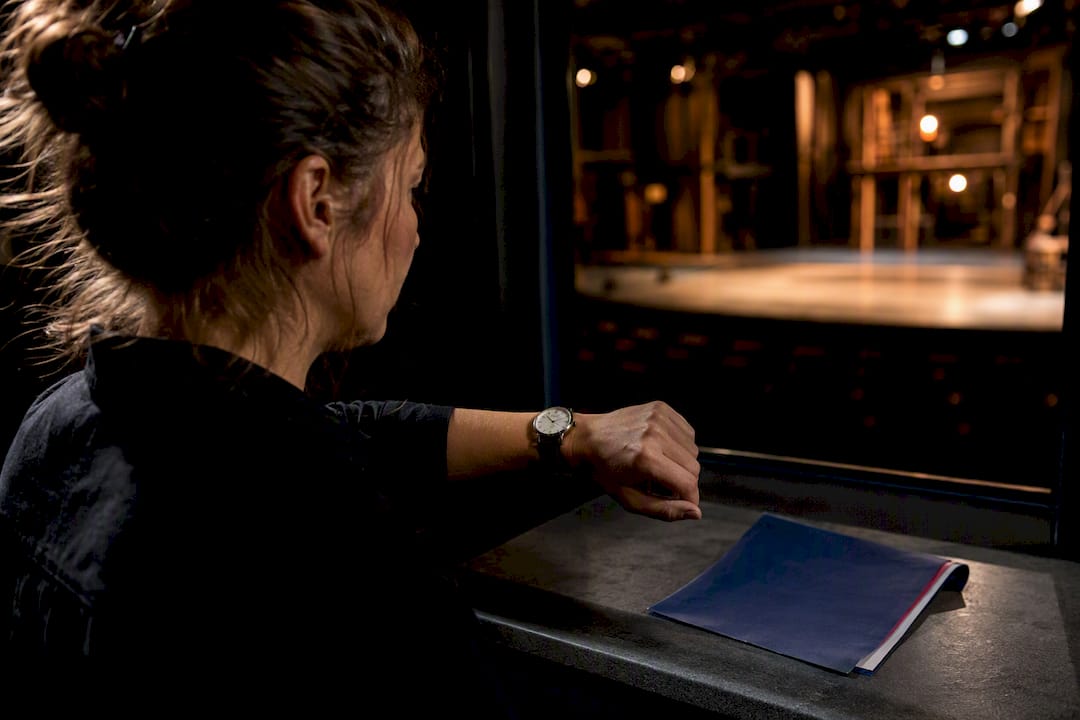
Call time is the exact moment stage management needs you in the building, in costume, or at your mark, and it always sits before curtain, never at it. The standard countdown runs half, 15, 10, 5, then Beginners (or Places), each one called by the deputy or production stage manager. In the UK, the half is typically given 35 minutes before curtain rather than 30, which builds in room for that final five-minute Beginners call. Timings shift slightly from house to house, so always check the daily call.
TL;DR:
The half-hour call is typically set 35 minutes before curtain in the UK to provide a safety buffer for last-minute preparations.
Call countdowns follow a standard sequence: 15 minutes for final warm-ups, 10 minutes for headset checks, 5 minutes for last checks, and the final call for all performers to be in position.
The daily call sheet is essential for signaling exact timings, with actors advised to save it immediately due to unreliable backstage signals.
Last-minute schedule changes are common, so performers should communicate delays promptly and prepare for added lead time for complex quick-changes.
Youth performers require extra reminders and clearer communication, often with added repetitions, to ensure they understand their call times comfortably.
Table of Contents
What theatre call times actually mean, minute by minute
The half, or half-hour call, is the first formal warning that curtain is close. In the UK this is often set 35 minutes before curtain rather than the tidy 30 you might expect, precisely so there’s a clean five minutes left for Beginners once the 15, 10 and 5 have passed. It sounds like a small quirk of house tradition. It’s actually a safety margin, giving the deputy stage manager (DSM) a buffer if hair, mic packs or a quick-change run behind schedule.
From there, the sequence is consistent across most British and much international practice, following the standard countdown of calls used by stage management teams everywhere:
Half (35 minutes before curtain in the UK): get into costume, start wigs and mics, warm up.
15 minutes: finish costume and make-up, run any last vocal warm-ups.
10 minutes: be at or near your entrance side, headset checks complete.
5 minutes: final checks, no more trips to the dressing room.
Beginners (or Places): everyone for the top of the show is on stage or in the wings, ready to go.
A DSM’s script for these calls stays short and clear: “This is your half hour, half hour please,” followed later by “Beginners, this is your Beginners call” moments before curtain. No embellishment, because clarity under pressure is the entire point of a call.
Who calls the show, and how the message reaches you
The deputy stage manager runs calls from the book, cueing lighting, sound and the calls themselves, while the production stage manager (PSM) oversees the whole show and troubleshoots problems the DSM can’t handle mid-call. Assistant stage managers (ASMs) often relay calls backstage in venues without a tannoy, walking corridors and knocking dressing-room doors directly.
Delivery method varies by building:
Tannoy or Show Relay: the most common method in professional and larger amateur houses, piping calls into every dressing room simultaneously.
Headsets: used between DSM, crew and follow-spot operators, rarely the method for cast calls.
Verbal/knock-and-call: the fallback in smaller venues or school halls, where an ASM physically checks each room.
Vocabulary shifts by house too. Many British theatres say “Beginners,” a term with roots in variety and rep theatre, while others, particularly in the US, say “Places.” Neither is wrong. Both mean the same thing: get to your opening position now.
Reading the daily call: your one essential document
The daily call, sometimes called the call sheet, is the single document that tells you exactly when you’re needed and for what. It typically lists the date, production, venue, individual and company call times, and general notes, and stage management usually distributes it the evening before or as soon as the schedule firms up.
To read one properly:
Find the venue and date first, especially useful on tour when locations change daily.
Scan the “who is called” column for your name or role, not just the general company call.
Note any “subject to change” flag, which means exactly what it says.
Check general notes for costume fittings, photo calls or press nights bolted onto the normal schedule.
If your call looks wrong or missing, ask the DSM or company stage manager immediately rather than guessing.
Pro Tip: Save every daily call to your phone the moment it lands. Signal in backstage corridors is unreliable, and a screenshot beats scrambling for signal five minutes before your call.
Sample call schedules you can copy and adapt
Actual minute-by-minute timings vary by production, but these three patterns cover most common showtimes and give you a template worth keeping.
Call | evening show | evening show | 2:30pm Saturday matinee |
Company arrival | 5:30pm | 6:10pm | 1:15pm |
Half (half-hour) | 6:20pm | 6:45pm | 1:50pm |
15 minutes | 6:40pm | 7:10pm | 2:15pm |
10 minutes | 6:45pm | 7:15pm | 2:20pm |
5 minutes | 6:45pm | 7:20pm | 2:20pm |
Beginners/Places | 6:45pm | 7:20pm | 2:20pm |
Curtain | 7:00 | 7:30 | 2:30pm |
Notice the half sits 35 minutes ahead of curtain throughout, in line with UK convention, leaving that neat five minutes for Beginners. Performers with wigs, elaborate make-up, or rigging such as harnesses and flying should treat “company arrival” as their floor, not their target. Adding 20 to 30 minutes of personal lead time for a complex quick-change or a full-face prosthetic is standard practice, and most stage managers will tell you it’s better to sit ready early than to sprint in during the 15.
Handling last-minute changes without losing your head
Treat the daily call as a living document rather than gospel. Stage managers routinely advise checking it fresh each day, because scene changes, cast illness or a tech note from the previous night can shift a call by ten minutes with no warning.
If you’re running late:
Call or message the stage manager the moment you know, not when you arrive.
Give an honest arrival estimate, not an optimistic one.
Tell them exactly what you’ll need to catch up (mic fit, costume check, warm-up) so they can plan around you.
Backstage etiquette matters just as much as the timings themselves. Keep noise down once the half has gone, never touch someone else’s headset channel without asking, and answer every call verbally so stage management knows you’ve heard it. Silence during a call is the one thing that makes a DSM’s stomach drop.
Pro Tip: Always acknowledge a call, even with a quiet “thank you.” It costs nothing and confirms to the person running the show that their message landed.
How Ocean Theatre Company handles calls for young performers
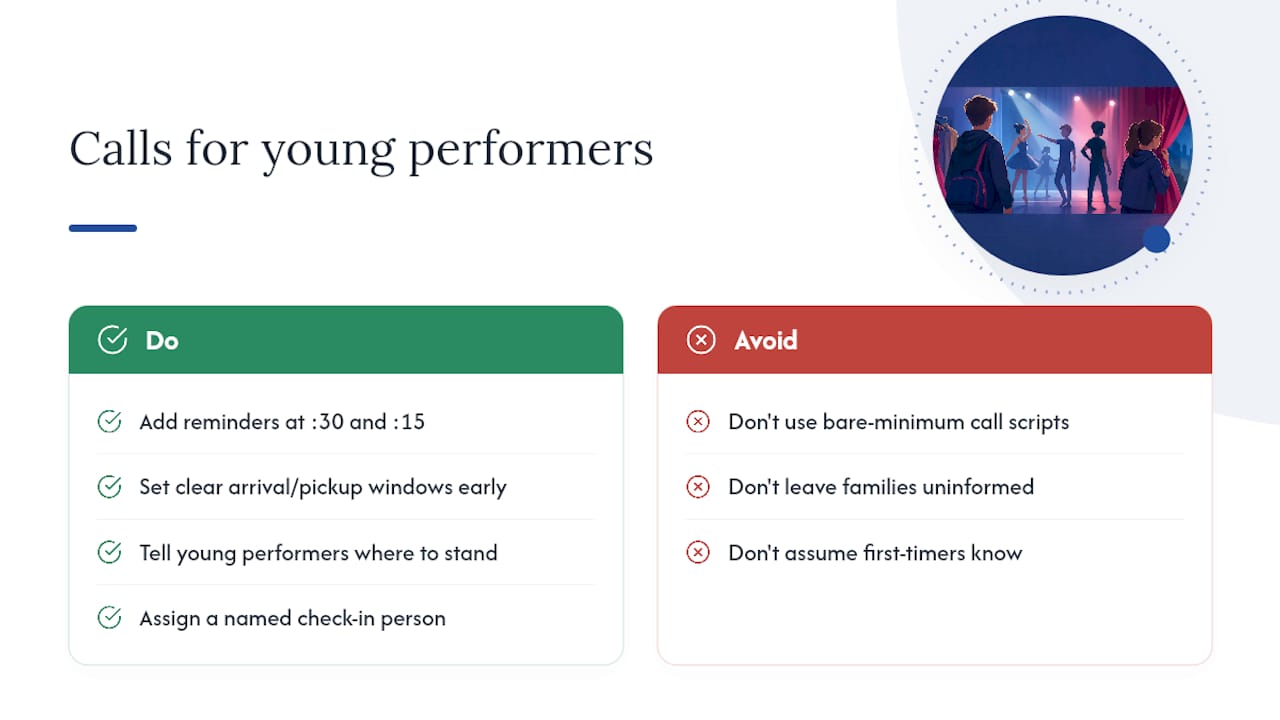
Working with performers aged 14 to 19 changes how we think about calls. A DSM’s script that works for a seasoned professional company needs more warmth and more repetition for a first-time performer, so our stage management team builds in extra reminders around the half and 15, not just the bare minimum.
Parents matter here too. We communicate arrival and pick-up windows clearly and early, because clear communication around timings reduces anxiety for families as much as it does for cast. A nervous 15-year-old on their first Beginners call needs to know exactly where to stand and who’s checking on them, and that clarity is something we build into every production, from smaller ensemble pieces through to full-scale shows like The Addams Family.
— Andrew
See these calls in practice at Ocean Theatre Co.
Everything above, the half-hour call, the daily call sheet, the Beginners moment before curtain, isn’t theory for us. It’s how productions run, often adapted specifically for younger performers who are learning these rhythms for the first time rather than arriving with extensive experience.
[

You can see this structure reflected in how we announce and organise our shows, from rehearsal communication through to performance week. Our production of Anastasia shows the kind of clear scheduling and parent communication we build into every show, and it’s worth a look if you want to see what a well-run youth call sheet looks like in the wild. If your teenager is curious about performing arts training in Berkshire, structured productions, and the confidence that comes from knowing exactly where to be and when, visit Ocean Theatre Company to find out about joining our next production.
Sources
Comments